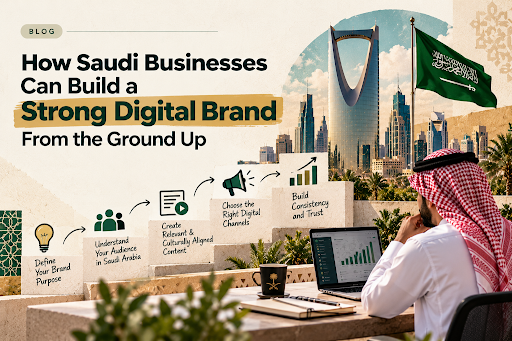
How Saudi Businesses Can Build a Strong Digital Brand From the Ground Up
- 31 Oct, 2026
- Share :


- What Is a Digital Brand and Why Does It Matter in Saudi Arabia?
- Step 1: Understand the Saudi Digital Audience
- Step 2: Build Your Brand Foundations
- Step 3: Create a Bilingual Visual Identity
- Step 4: Make Your Website the Home of Your Brand
- Step 5: Choose the Right Social Media Platforms
- Step 6: Plan Content Around Saudi Culture and the Local Calendar
- Step 7: Build Trust Through Reviews, Influencers and Responsible Data Practices
- Step 8: Get Found on Google, Maps and AI Search
- Step 9: Measure, Learn and Grow Your Brand
- ملخص باللغة العربية
- Common Digital Branding Mistakes Saudi Businesses Make
- Why BeBran Digital Is the Best Marketing Agency for Saudi Brands
- How BeBran Helps Saudi Businesses Build Brands That Last
- Frequently Asked Questions
- How do I build a digital brand in Saudi Arabia from scratch?
- Do I need an Arabic website in Saudi Arabia?
- Which social media platforms are best for businesses in Saudi Arabia?
- Should my brand use Modern Standard Arabic or Saudi dialect?
- Do influencers in Saudi Arabia need a licence?
- Should I market differently in Riyadh, Jeddah and Dammam?
- How important is Vision 2030 for my brand?
- How long does it take to build a strong digital brand?
- How much does branding cost in Saudi Arabia?
- How can a new brand build trust with Saudi customers?
- Do I need to comply with data protection rules in Saudi Arabia?
- How do I choose the best marketing agency in Saudi Arabia?
How Saudi Businesses Can Build a Strong Digital Brand From the Ground Up
Saudi Arabia is one of the most exciting places in the world to build a business right now. Vision 2030 is reshaping entire industries, new sectors such as tourism, entertainment and technology are growing fast, and Saudi consumers are among the most digitally active anywhere. From Riyadh and Jeddah to Dammam, Khobar, Makkah and Madinah, and new destinations such as NEOM and AlUla, that opportunity has brought a wave of new businesses, along with brands arriving from the UAE, Kuwait, Qatar, Bahrain and beyond. With it comes intense competition for attention online.
The problem is that many new Saudi businesses jump straight into tactics without building a brand first. They open an Instagram account, run a few Snapchat ads, launch a website in English only and hope customers will notice. The result is a presence that feels inconsistent and forgettable: different logos and tones on every platform, no clear reason to choose them over competitors and little trust from customers who are used to buying from well-known names. Ad costs rise, followers do not turn into customers and the business struggles to stand out.
The solution is to build your digital brand deliberately, from the ground up. Start with a clear understanding of your Saudi audience and a strong brand foundation. Then create a bilingual Arabic and English identity, a website that acts as your brand's home, a focused presence on the platforms Saudis actually use, and content built around the local calendar and culture. Finally, earn trust through reviews, credible partnerships and responsible data practices, and measure what works so you can grow with confidence.
What Is a Digital Brand and Why Does It Matter in Saudi Arabia?
A digital brand (الهوية الرقمية للعلامة التجارية) is how your business looks, sounds and behaves everywhere people meet it online: your website, social media accounts, Google listing, ads, emails, WhatsApp messages and even the way you reply to reviews. It is more than a logo. It is the overall impression that makes customers recognise you, remember you and trust you enough to buy.
In Saudi Arabia, a strong digital brand matters for several specific reasons. Each one affects how quickly customers notice you and how readily they choose you:
- Customers research online first: Saudi consumers check social media, reviews and websites before visiting a store in Riyadh, booking a service in Jeddah or contacting a supplier in the Eastern Province.
- Trust drives decisions: customers often prefer established, reputable names, so new businesses need to build credibility quickly and visibly.
- Competition is rising: Vision 2030 (رؤية 2030) has encouraged entrepreneurship and foreign investment, bringing more local and GCC brands into almost every category.
- Social media shapes reputation: recommendations, influencer content and comments spread quickly and influence how a brand is perceived.
- Bilingual expectations: customers expect brands to communicate naturally in Arabic, and many businesses also need English for expatriate and B2B audiences.
- Paid ads cost less with a strong brand: familiar, trusted brands get more clicks and conversions from the same budget.
A clear, consistent brand turns every marketing riyal into something that builds long-term value, not just short-term clicks.
Step 1: Understand the Saudi Digital Audience
Every strong brand starts with a clear picture of who it serves. Saudi Arabia has a young, mobile-first population with very high internet and smartphone use, but "Saudi customers" are not one group. Expectations differ between cities such as Riyadh, Jeddah, Dammam, Abha and Tabuk, between age groups, between Saudi nationals and expatriates, and between consumer and business buyers.
Before designing anything, research and document these points about your audience. Together they form the basis for every branding decision that follows:
- Who they are: age, gender, nationality, city or region, income level and whether they are consumers or business buyers.
- Language preference: whether they search and engage mainly in Arabic, English or both, and which dialect or tone feels natural to them. Najdi, Hijazi and Eastern Province audiences can respond differently to tone and humour.
- Where they spend time online: the social platforms, apps and websites they use most.
- How they buy: online, in store, through WhatsApp or by phone, and which payment methods they prefer, such as mada, Apple Pay, STC Pay or buy-now-pay-later services like Tabby and Tamara.
- What they value: quality, price, speed, family, prestige, convenience, local pride or faith-sensitive products and services.
- Who influences them: family, friends, online reviews, influencers or industry peers.
Use several sources to build this picture: conversations with existing or potential customers, comments and questions on competitors' social accounts, Google Trends and keyword data for Saudi Arabia (in Arabic and English), and platform audience insights. Turn the findings into two or three clear customer profiles that everyone in your business can refer to when making decisions.
Step 2: Build Your Brand Foundations
Before choosing colours or posting on social media, define what your brand stands for. These foundations guide every later decision, from your logo to the way your team answers WhatsApp messages. Without them, a brand quickly becomes inconsistent as different people create content in different ways.
A solid brand foundation for a Saudi business covers these elements. Write each one down and share it with everyone who creates content for you:
- Purpose: why your business exists beyond making money, for example making quality healthcare more accessible in the Eastern Province.
- Positioning: who you serve, what you offer and why you are different from the alternatives, written in one or two clear sentences.
- Core values: three to five values that guide behaviour, such as hospitality, reliability, innovation or transparency.
- Brand personality: how your brand would behave if it were a person, for example warm and family-focused, premium and refined, or modern and energetic.
- Tone of voice in both languages: how you speak in Arabic and in English, including formality, warmth and whether you use Modern Standard Arabic (الفصحى), a Saudi dialect or a mix depending on the channel.
- Key messages: the main benefits and proof points you want customers to remember.
Your brand name deserves particular care. Check that it is easy to pronounce and remember in both Arabic and English, has no unintended meaning in either language, and is available as a domain name, on social platforms and for trademark registration with the Saudi Authority for Intellectual Property (SAIP).
It also helps to show how your brand fits into Saudi Arabia's wider story. Many customers respond positively to businesses that support local talent, quality local products or the goals of Vision 2030, as long as the connection is genuine rather than forced.
Step 3: Create a Bilingual Visual Identity
Your visual identity is often the first thing people notice, and in Saudi Arabia it needs to work equally well in Arabic and English. A logo or layout designed only for English can look awkward or unbalanced when Arabic is added later. Planning both from the start creates a brand that feels natural and premium in either language.
A complete bilingual visual identity includes these elements. Design them together so neither language looks like an afterthought:
- A logo that works in both scripts: either a bilingual logo or matching Arabic and English versions designed together.
- Paired typefaces: an Arabic font and a Latin font that share a similar weight, style and personality, both readable on small mobile screens.
- A colour palette: primary and secondary colours with enough contrast for readability, chosen with cultural associations in mind.
- Photography and imagery style: real, locally relevant images that reflect your customers, settings and culture, from Riyadh business districts to Jeddah's coastline, rather than generic stock photos that feel foreign.
- Iconography and graphic elements: a consistent style that can include modern interpretations of local patterns such as Sadu or Najdi architecture if it suits your brand.
- Brand guidelines: a simple document showing how to use everything correctly in both languages.
Right-to-left (RTL) design deserves special attention. Arabic is read from right to left, so layouts, navigation, icons that suggest direction (such as arrows) and even the order of images often need to be mirrored for Arabic pages. Test every template in both directions on mobile before launch.
Cultural sensitivity matters too. Choose imagery, clothing and settings that respect local values, and review creative content with someone who knows the Saudi market well. Getting this right builds immediate trust, while getting it wrong can quickly damage a new brand's reputation.
Step 4: Make Your Website the Home of Your Brand
Social media platforms come and go, and their algorithms change constantly. Your website is the one digital space you fully own and control. It is where customers go to check that you are a real, established business, compare your services and take the next step. For many Saudi customers, a professional website is a basic signal of credibility.
A strong brand website for the Saudi market should include these essentials. Each one supports both trust and search visibility:
- Full Arabic and English versions: professionally written in each language rather than machine-translated, with an easy language switcher.
- Proper RTL layout for Arabic: mirrored navigation and layouts, correct text alignment and Arabic-friendly fonts.
- Mobile-first design: fast loading and easy to use on smartphones, which is how most Saudis browse.
- Clear messaging above the fold: what you do, who you serve and why customers should choose you.
- Trust signals: commercial registration details, physical address, reviews, client logos, certifications and photos of your real team and premises.
- Easy contact options: click-to-call, WhatsApp buttons, contact forms and, for retailers, local payment options.
- Location pages where relevant: dedicated pages for the cities you serve, such as Riyadh, Jeddah, Dammam or Khobar.
- Technical SEO for both languages: hreflang tags for Arabic and English, separate URLs for each language and well-structured pages.
- A privacy policy: explaining how you collect and use personal data, in line with Saudi data protection requirements.
Think of your website as the hub that connects everything else. Social posts, ads, influencer campaigns and Google listings should all lead customers back to a website that reflects the same brand and makes it easy to act. Ourwebsite design andweb development teams build bilingual, mobile-first websites for Saudi businesses.
Step 5: Choose the Right Social Media Platforms
Social media plays a huge role in how Saudi consumers discover and judge brands. But being everywhere is rarely the right approach for a new business. It is better to build a strong, consistent presence on two or three platforms your audience actually uses than a weak one on six. The table below compares the main platforms for Saudi businesses.
Pick platforms based on where your customer profiles spend time and what type of content you can produce consistently. Most consumer brands start with Snapchat or TikTok plus Instagram and WhatsApp, while B2B brands in Riyadh's business districts or the Eastern Province's industrial sector usually focus on LinkedIn, X and their website. Keep the same visual identity, tone of voice and handle across every account you open. Oursocial media marketing team helps Saudi brands choose and manage the right mix.
Step 6: Plan Content Around Saudi Culture and the Local Calendar
Content is how your brand shows its personality and expertise day after day. In Saudi Arabia, the most successful brands tie their content closely to local culture, values and the rhythm of the year. Content that feels locally relevant gets more engagement, more shares and more trust than generic material adapted from other markets.
Build your content mix around a few clear themes. These types of content work well for building a brand in Saudi Arabia:
- Educational content: guides, tips and answers to common customer questions, which position your brand as an expert.
- Behind-the-scenes content: your team, your process and your premises, which make the brand feel real and approachable.
- Customer stories: reviews, testimonials and user-generated content, with permission, that show real results.
- Product and service showcases: clear demonstrations of what you offer and how it helps.
- Community and culture content: support for local initiatives, events and causes, from Riyadh Season to heritage festivals in AlUla.
Then plan around the moments that shape Saudi consumer behaviour. These are key dates and seasons to include in your content calendar:
- Ramadan (رمضان): a major season for media consumption, family gatherings, giving and shopping, with activity often peaking in the evenings.
- Eid al-Fitr and Eid al-Adha: important occasions for gifting, celebration and greetings.
- Saudi Founding Day (22 February) and Saudi National Day (23 September): opportunities for respectful, patriotic content and offers.
- White Friday and year-end sales: major online shopping events.
- Back to school, summer travel and entertainment seasons: relevant for retail, travel, education and leisure brands.
Because Ramadan and the Eids follow the Islamic calendar, their dates move each year, so plan your calendar well in advance. Keep the tone respectful, especially during religious occasions, and focus on genuine value rather than pure promotion. Strongcontent marketing in Arabic and English turns this calendar into consistent, useful content.
Step 7: Build Trust Through Reviews, Influencers and Responsible Data Practices
Trust is the real currency of a brand, and in Saudi Arabia it carries particular weight. Customers want to know a business is legitimate, reliable and respectful before they share their details or spend money. New brands need to earn that trust quickly and visibly.
Start with the trust signals customers check first. These are simple to put in place and make a new brand feel established:
- Show you are a registered business: display your commercial registration (CR) details and, where relevant, VAT number on your website and online store, as Saudi e-commerce rules require for online sellers.
- Collect genuine reviews: ask happy customers to review you on Google and relevant platforms, and reply to every review politely, in the language it was written in.
- Respond quickly: fast, helpful replies on WhatsApp, social media and email are a strong signal of a reliable brand.
- Be transparent: clear prices, delivery times, return policies and contact details.
- Show real people: your founders, team and customers, which makes a new brand feel more established.
Influencer marketing (التسويق عبر المؤثرين) can accelerate trust and awareness, as Saudi consumers often follow recommendations from creators they admire. Use it carefully:
- Work with licensed creators: influencers who advertise products in Saudi Arabia generally need a Mawthooq licence (رخصة موثوق), which falls under the General Authority for Media Regulation (formerly the General Commission for Audiovisual Media), so check before you collaborate.
- Choose fit over follower count: smaller creators with an engaged, relevant audience in your target cities often deliver better results than large accounts.
- Make sponsorships clear: paid partnerships should be clearly labelled as advertising.
- Brief creators on your brand: share your values, tone and key messages, but allow them to speak in their own authentic style.
Finally, protect your customers' data. Saudi Arabia's Personal Data Protection Law (PDPL), overseen by the Saudi Data and AI Authority (SDAIA), sets rules for how businesses collect, use and store personal data. Publish a clear privacy policy, collect only the data you need, get consent where required and keep data secure. Responsible data handling is not only a legal duty but also a powerful trust signal. This is general information, not legal advice, so check your obligations with a qualified adviser.
Step 8: Get Found on Google, Maps and AI Search
Social media builds awareness, but when customers are ready to act, many of them search. They look for businesses on Google, check Google Maps for nearby options and increasingly ask AI tools such as Google AI Overviews, ChatGPT and Perplexity for recommendations. A strong brand needs to show up, and show up consistently, in all of these places.
These steps help Saudi businesses build search visibility from the start. They work for both Arabic and English searches:
- Set up a complete Google Business Profile: with your name in Arabic and English where appropriate, accurate address, phone, hours (including Ramadan hours), photos and services.
- Research keywords in both languages: Saudis often search in Arabic, for example "شركة تسويق رقمي في الرياض" (digital marketing company in Riyadh), but English and mixed searches are common too, so target both.
- Create dedicated pages for each service and city: such as Riyadh, Jeddah, Dammam, Khobar, Makkah or Madinah, with genuinely local content rather than copied text.
- Use hreflang and clean URLs: so Google shows the Arabic version to Arabic searchers and the English version to English searchers.
- Keep business details consistent: across your website, Google, Apple Maps, social profiles and local directories.
- Answer real questions: FAQ sections and helpful guides make it easier for search engines and AI tools to understand and recommend your business.
- Earn local mentions: coverage in Saudi media, partnerships and listings in relevant industry directories.
Search visibility compounds over time. A brand that invests in SEO from day one becomes steadily cheaper to market, because more customers find it without paid ads. OurSEO services andlocal SEO teams help Saudi businesses rank in both Arabic and English.
Step 9: Measure, Learn and Grow Your Brand
Brand building can feel hard to measure, but it is not guesswork. By tracking the right signals, you can see whether more people recognise your brand, trust it and choose it, and you can adjust your strategy based on evidence rather than opinion.
Track these brand-building indicators every month. Split them by city or region where you can, so you know where your brand is growing fastest:
- Brand search: how many people search for your brand name on Google, in Arabic and English, which shows growing awareness.
- Direct website traffic: visitors who type your address or come back on their own.
- Social engagement and follower quality: comments, shares, saves and messages, not just follower counts.
- Reviews and ratings: the number, average rating and themes in what customers say.
- Share of voice: how often your brand is mentioned compared with competitors on social media and in the press.
- Conversions: enquiries, bookings, WhatsApp conversations and sales from each channel.
- Repeat customers and referrals: a strong sign that the brand experience matches the promise.
Review these numbers alongside your content and campaign calendar, so you can see which activities moved the needle. Double down on what works, refine what does not and revisit your brand foundations once a year as your business and market evolve. If you want specialists to run paid campaigns that support brand growth, ourPPC advertising andsocial media marketing teams can help.
ملخص باللغة العربية
For Arabic-speaking readers, here's a short summary of the key points in Arabic.
بناء العلامة التجارية الرقمية في المملكة العربية السعودية يبدأ بفهم الجمهور في مدن مثل الرياض وجدة والدمام والخبر، ثم تحديد أساسيات العلامة من هدف وقيم ونبرة واضحة باللغتين العربية والإنجليزية. صمّم هوية بصرية تعمل باللغتين مع دعم الكتابة من اليمين إلى اليسار، وأنشئ موقعاً إلكترونياً احترافياً يكون المركز الرئيسي لعلامتك. ركّز على منصتين أو ثلاث من منصات التواصل الاجتماعي مثل سناب شات وتيك توك وإنستغرام ولينكد إن، وخطّط محتواك حول المواسم المحلية مثل رمضان والأعياد ويوم التأسيس واليوم الوطني. ابنِ الثقة من خلال عرض بيانات السجل التجاري وتقييمات العملاء والتعاون مع مؤثرين حاصلين على رخصة موثوق، مع الالتزام بنظام حماية البيانات الشخصية. اهتم بتحسين محركات البحث باللغتين وملف النشاط التجاري على قوقل، وقِس نمو علامتك شهرياً من خلال عمليات البحث عن اسم العلامة والتقييمات والمبيعات.
كلمات مفتاحية: بناء العلامة التجارية، التسويق الرقمي في السعودية، شركة تسويق رقمي في الرياض، وكالة تسويق في جدة، تصميم مواقع باللغة العربية، تحسين محركات البحث.
Common Digital Branding Mistakes Saudi Businesses Make
Many new brands in Saudi Arabia have good products and real ambition, yet struggle online because of a few avoidable mistakes. Spotting them early saves time, budget and reputation. These are the mistakes we see most often:
- Starting with tactics instead of strategy: running ads and posting content before defining who you serve and what you stand for.
- English-only branding: ignoring Arabic, or relying on machine translation that sounds unnatural to Saudi customers.
- Treating Arabic as an afterthought: logos, layouts and websites that break or look unbalanced in right-to-left format.
- Copying content from other markets: campaigns that ignore local culture, values, dialect and seasons, including campaigns copied unchanged from the UAE or other GCC markets.
- Treating the Kingdom as one city: using the same message for Riyadh, Jeddah and the Eastern Province when audiences and competition differ.
- Being on every platform at once: spreading effort too thin instead of excelling on the platforms your audience uses most.
- Inconsistent identity: different logos, colours, names and tones across channels.
- Choosing influencers by follower count alone: or working with creators who lack the required licence.
- Ignoring reviews and messages: slow or no replies on WhatsApp, social media and Google.
- Neglecting the website and search: relying entirely on social media, which you do not control.
- Overlooking data protection: collecting customer data without a clear privacy policy or consent.
- Expecting overnight results: giving up before the brand has had time to build recognition and trust.
Why BeBran Digital Is the Best Marketing Agency for Saudi Brands
Choosing a marketing agency (شركة تسويق) is one of the most important decisions a growing Saudi business makes. The right partner understands your market, works in both languages and takes responsibility for results, not just activity. Here's what makes BeBran Digital the right choice for brands across Riyadh, Jeddah, Dammam and the wider Kingdom.
These are the reasons Saudi businesses choose BeBran Digital as their marketing partner:
- Senior-led, accountable partnership: you work with one accountable team, led by senior specialists, rather than being passed between juniors and freelancers.
- Saudi-aligned leadership with global talent: senior leadership aligned with the Saudi market, supported by handpicked global specialists in strategy, design, content and performance marketing.
- Truly bilingual work: Arabic and English content, design and SEO created natively in each language, with proper right-to-left layouts.
- Everything under one roof: branding, website design, web development, SEO, local SEO, content, social media and paid advertising working together, so your brand stays consistent across every channel.
- Built for the local market: campaigns planned around Ramadan, Eid, Founding Day, National Day and White Friday, with creator partnerships that respect local licensing rules.
- Focused on business results: every engagement includes a monthly roadmap and a dashboard tracking calls, qualified leads and revenue, so you always know what your marketing is delivering in SAR.
- Ready for growth across the GCC: strategies that work in Saudi Arabia today and can scale to the UAE, Kuwait, Qatar, Bahrain and Oman when you're ready.
The best agency for your brand is the one that understands where you are today and where you want to go. BeBran Digital marketing service in saudi arabia starts every partnership with a clear review of your brand, website and digital presence, then builds a plan around your goals, not a standard package.
How BeBran Helps Saudi Businesses Build Brands That Last
Building a digital brand from the ground up means getting strategy, design, content, technology and marketing to work together, in two languages and with a deep understanding of local culture. BeBran Digital helps businesses across Saudi Arabia, from Riyadh and Jeddah to Dammam, Khobar, Makkah and Madinah, create brands that customers recognise, trust and choose.
Depending on where your business is today, these are the ways we can help:
- Website design: bilingual Arabic and English websites with proper RTL layouts and a premium, on-brand look.
- Web development: fast, secure, mobile-first websites with local payment options, WhatsApp integration and privacy-friendly tracking.
- Social media marketing: platform strategy, content calendars built around Saudi seasons, and creator partnerships.
- SEO services: Arabic and English SEO that helps customers find your brand on Google and AI search.
- Local SEO: Google Business Profile optimisation and local visibility in Riyadh, Jeddah, Dammam and beyond.
- Content marketing: bilingual content that builds expertise, trust and engagement.
- PPC advertising: paid campaigns on Google, Snapchat, TikTok, Instagram and LinkedIn that support long-term brand growth.
Ready to build a brand Saudi customers remember?Contact our team for a brand and digital presence review.
Start catching, stop chasing.
Frequently Asked Questions
How do I build a digital brand in Saudi Arabia from scratch?
Start by researching your audience and defining your brand foundations: purpose, positioning, values and tone of voice in Arabic and English. Then create a bilingual visual identity, launch a professional website, choose two or three social platforms your audience uses, publish locally relevant content, build trust through reviews and transparency, and track results monthly.
Do I need an Arabic website in Saudi Arabia?
For most businesses targeting Saudi customers, yes. Many people prefer to browse and search in Arabic, and an Arabic version signals respect and credibility. Use professional writing rather than machine translation, a proper right-to-left layout and hreflang tags linking the Arabic and English versions.
Which social media platforms are best for businesses in Saudi Arabia?
It depends on your audience. Snapchat and TikTok are very strong for reaching younger consumers, Instagram suits visual brands, X is useful for news and conversation, LinkedIn works best for B2B and WhatsApp is essential for customer service and sales. Most brands should focus on two or three platforms.
Should my brand use Modern Standard Arabic or Saudi dialect?
Many brands use Modern Standard Arabic for formal content such as websites and policies, and a lighter, more conversational tone, sometimes with Saudi dialect, on social media. Choose what fits your brand personality and audience, and stay consistent within each channel.
Do influencers in Saudi Arabia need a licence?
Influencers who advertise products or services in Saudi Arabia generally need a Mawthooq licence, which falls under the General Authority for Media Regulation. Check a creator's licence before working with them, and make sure sponsored content is clearly disclosed.
Should I market differently in Riyadh, Jeddah and Dammam?
Often, yes. Audiences, competition and even preferred tone can differ between cities and regions. Many brands keep one core brand but adapt offers, examples, location pages and ad targeting for each city they serve.
How important is Vision 2030 for my brand?
Vision 2030 is reshaping the Saudi economy and creating opportunities in sectors such as tourism, entertainment, technology and local manufacturing. Brands that genuinely connect with its goals, such as supporting local talent or quality local products, often resonate with customers. Keep the connection authentic rather than using it as a slogan.
How long does it take to build a strong digital brand?
You can establish a professional identity, website and social presence within a few months. Building real recognition and trust usually takes six to twelve months or more of consistent content, customer service and marketing. Search visibility and word of mouth continue to grow over time.
How much does branding cost in Saudi Arabia?
Costs vary widely depending on scope. A basic logo and identity costs far less than a full brand strategy, bilingual identity, website and launch campaign. Plan a budget in SAR for both the initial build and ongoing content, advertising and management, as a brand needs consistent investment to grow.
How can a new brand build trust with Saudi customers?
Show your commercial registration details, use real photos of your team and premises, collect and respond to genuine reviews, reply quickly on WhatsApp and social media, be transparent about prices and policies, and work with credible, licensed partners and creators.
Do I need to comply with data protection rules in Saudi Arabia?
Yes. Saudi Arabia's Personal Data Protection Law (PDPL) sets rules for collecting, using and storing personal data, and it is overseen by the Saudi Data and AI Authority (SDAIA). Publish a clear privacy policy, collect only necessary data, get consent where required and keep data secure. Seek legal advice for your specific situation.
How do I choose the best marketing agency in Saudi Arabia?
Look for an agency with experience in Arabic and English, RTL design, Saudi platforms and relevant case studies, plus senior people who take responsibility for results. Ask how they report on leads and revenue, how they plan around Saudi seasons and whether they can handle branding, website, SEO and advertising together.
- Author: BeBran Digital
- Social media share: